


Fangoria
Publication Identification
| Field | Information |
| Country | United States |
| Publisher | O’Quinn Studios (attributed in the supplied research record; not established by the cover) |
| Publisher address | Pending research update |
| Magazine title | Fangoria |
| Publication status | Pending research update |
| Publication run | Founded in 1979 according to the existing research record; complete publication run pending research update |
| Editor | Pending research update |
| Printer | Pending research update |
| ISSN | Pending research update |
| Language | English |
| Publication type | Horror film and genre magazine |
| Publication frequency | Monthly during this period, as described in the existing research record |
Preservation Significance
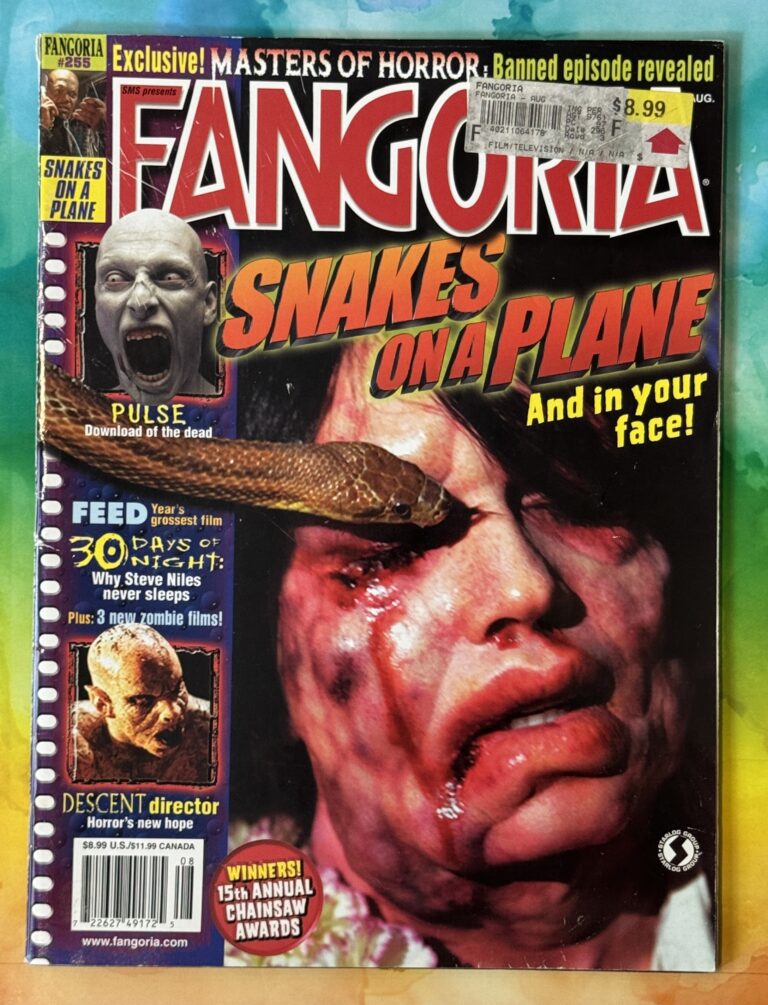
This issue has preservation significance because it captures a particularly direct example of snakes being used as instruments of fear in popular horror culture. The physical cover preserves the visual strategy itself: a snake thrust toward an injured human face, accompanied by language emphasizing confrontation and threat. It documents how entertainment media can reinforce the cultural association between snakes and terror, an association that can feed unjustified fear and complicate efforts to teach people about the actual behavior, ecological importance, and diversity of snakes.
Preserving the issue records both a moment in horror publishing associated with the 2006 film Snakes on a Plane and an example of the broader cultural history of human attitudes toward snakes. This is an interpretation of the cover’s representation, not evidence that the magazine caused a measurable change in public attitudes.