


National Geographic
Publication Identification
| Field | Information |
| Country | United States |
| Publisher | National Geographic Society |
| Publisher address | Pending research update. Historical publication location: Washington, D.C.; exact street address not established. |
| Magazine title | National Geographic |
| Publication status | Continuing publication; the represented physical issues date from 1970 and 1971 |
| Publication run | Founded in 1888; the full publication run extends beyond the 1970 and 1971 issues represented here |
| Editor | Pending research update |
| Printer | Pending research update |
| ISSN | Pending research update |
| Language | English |
| Publication type | General interest geography, science, natural history, culture, exploration, and photography magazine |
| Publication frequency | Monthly |
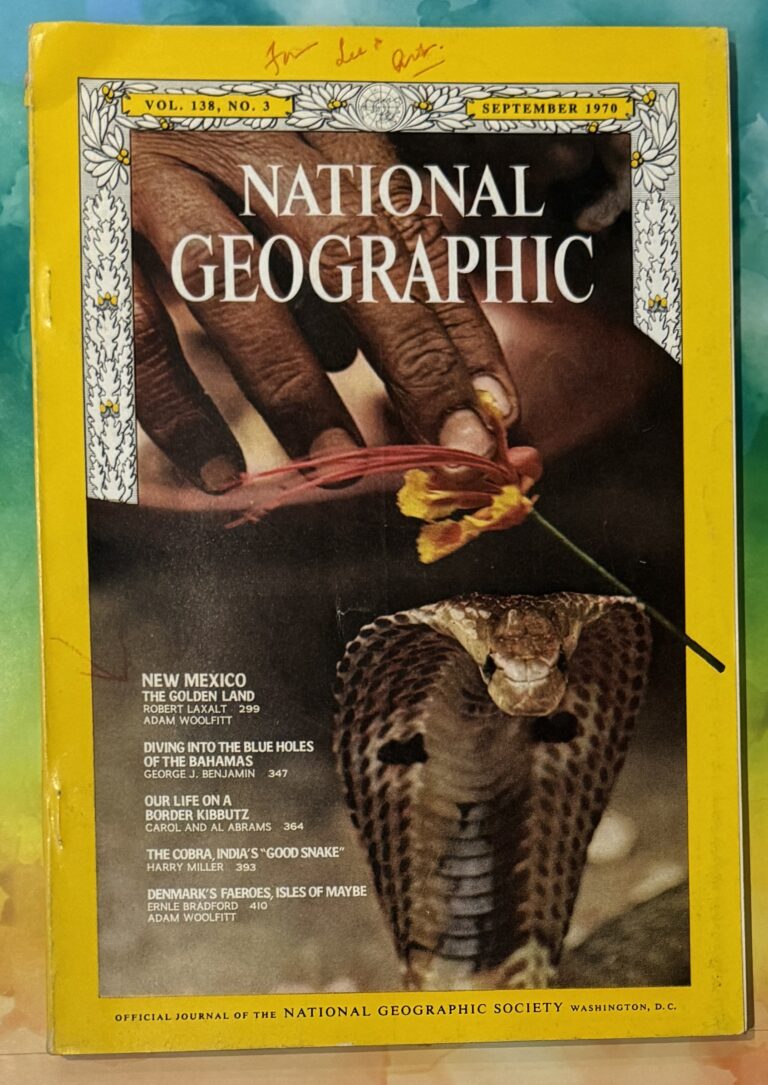
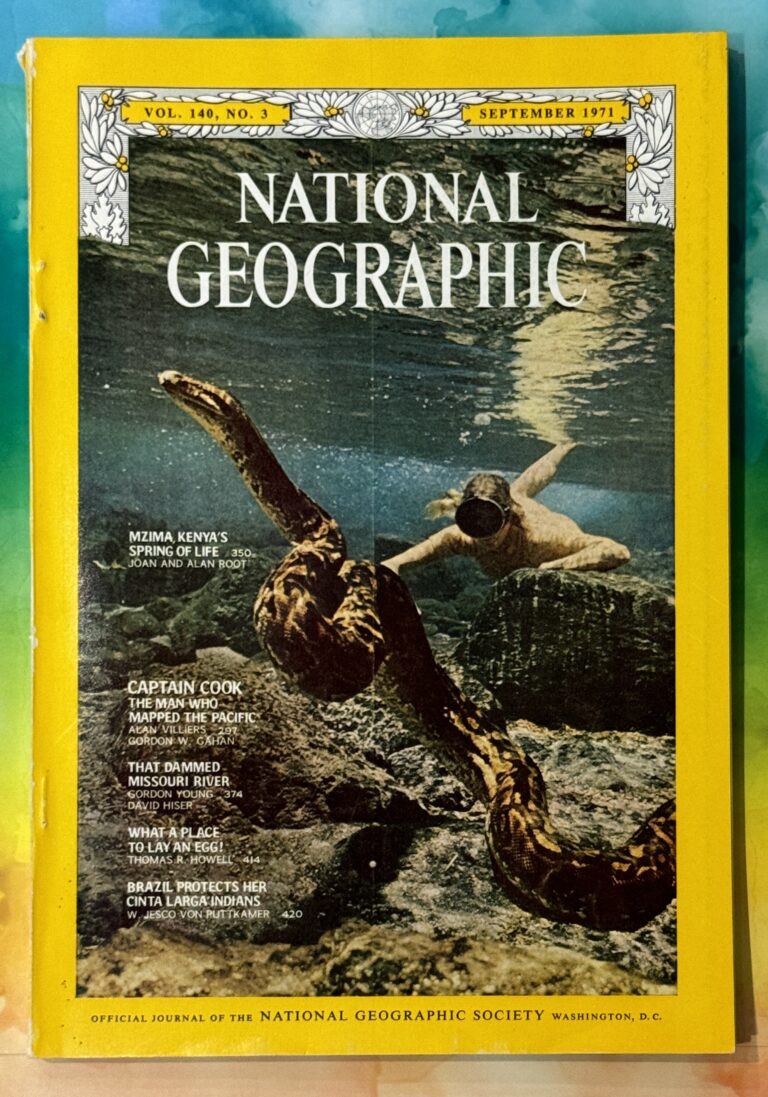
Preservation Significance
These issues have preservation significance because they preserve a subtler form of snake representation than openly sensational or inaccurate publications. National Geographic presented substantive natural history and cultural material, yet its covers still used snakes in purposeful, dramatic compositions that emphasize confrontation, size, proximity, and perceived danger. Preserving these issues makes it possible to study how even credible educational media could simultaneously foster fascination with snakes and draw upon the public’s fear of them. Together with more overtly frightening portrayals in other magazines, these covers help document the long history of snakes being visually framed to attract attention, create tension, and sell publications.