


Japan
Repfan (レプファン)
Publication Identification
| Field | Information |
| Country | Japan |
| Publisher | Kasakura Publishing Co., Ltd. / 笠倉出版社 |
| Publisher address | Pending research update |
| Magazine title | REPFAN / レプファン |
| Publication status | Ongoing series, as documented in the original research record |
| Publication run | Documented represented volumes from December 2018 through May 2024; series start date and complete span: Pending research update |
| Editor | Pending research update |
| Printer | Pending research update |
| ISSN | Not applicable to the documented individually ISBN-identified mook volumes; see Research Cautions |
| Language | Japanese, with frequent English feature headings and species names |
| Publication type | Japanese reptile and exotic animal mook, issued within the SAKURA MOOK line |
| Publication frequency | Several times annually according to the current listings; exact historical schedule: Pending research update |
Preservation Significance
REPFAN adds a distinctly Japanese publishing perspective to the preservation project. Unlike the British and American hobby magazines in the collection, REPFAN is issued as a Japanese mook within the SAKURA MOOK line. The represented copies therefore preserve not only reptile husbandry information but also a different national publishing format, graphic style, terminology and presentation of the reptile hobby.
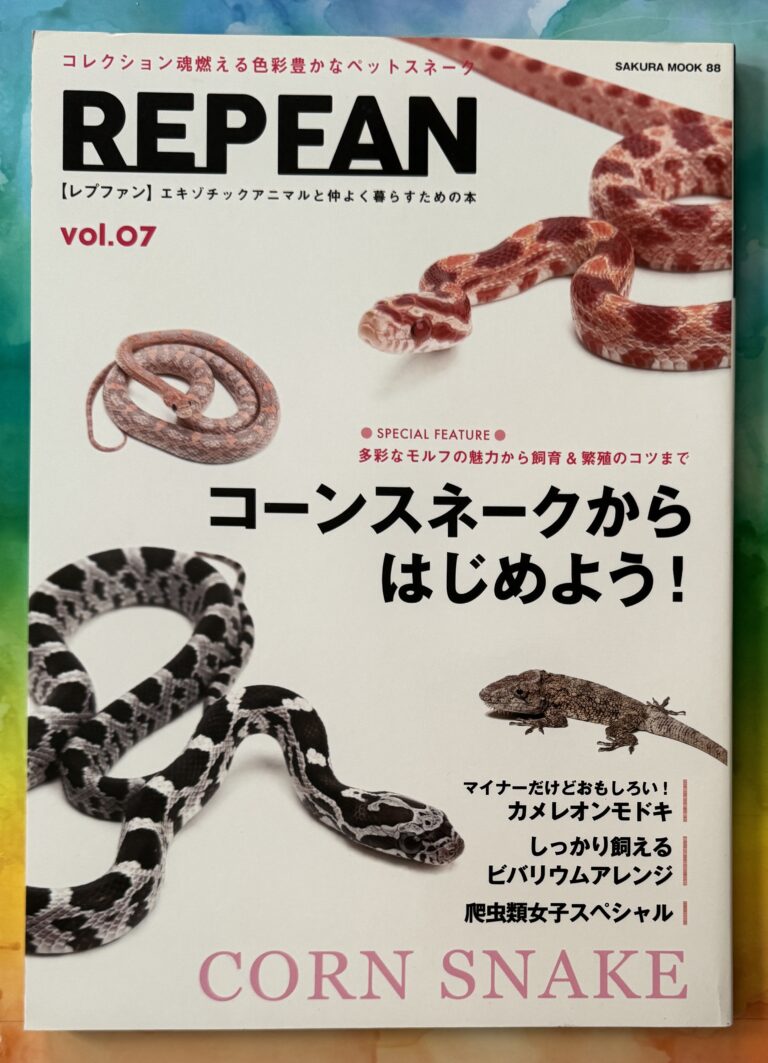
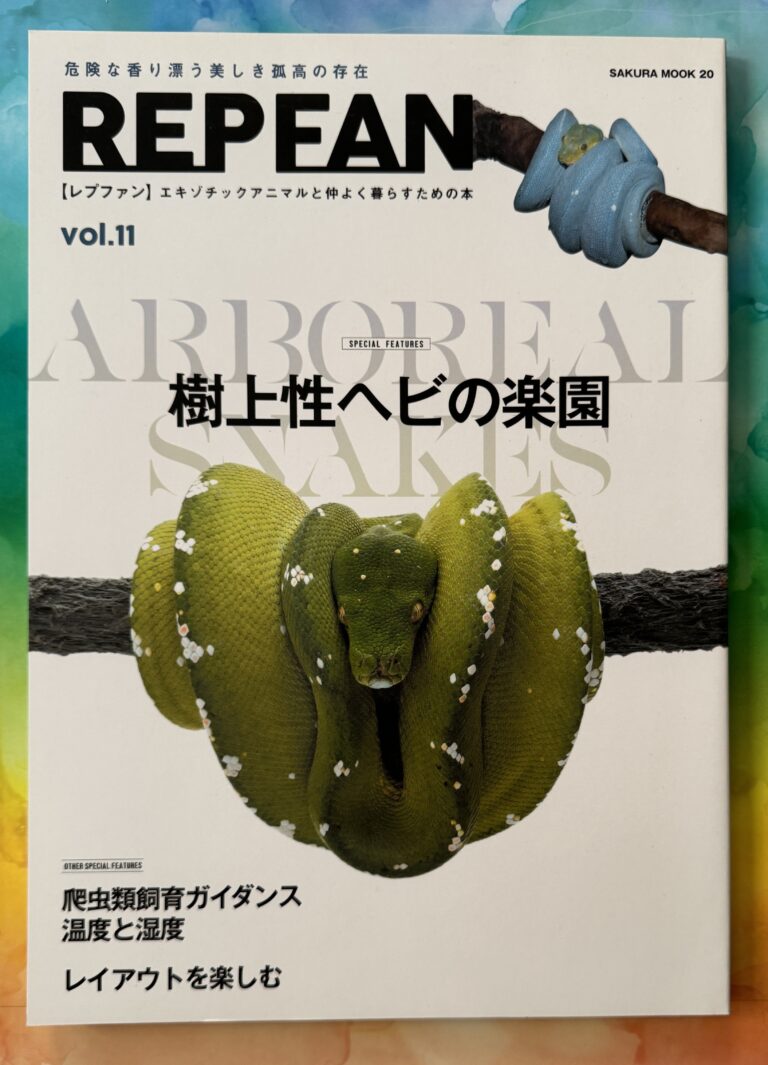
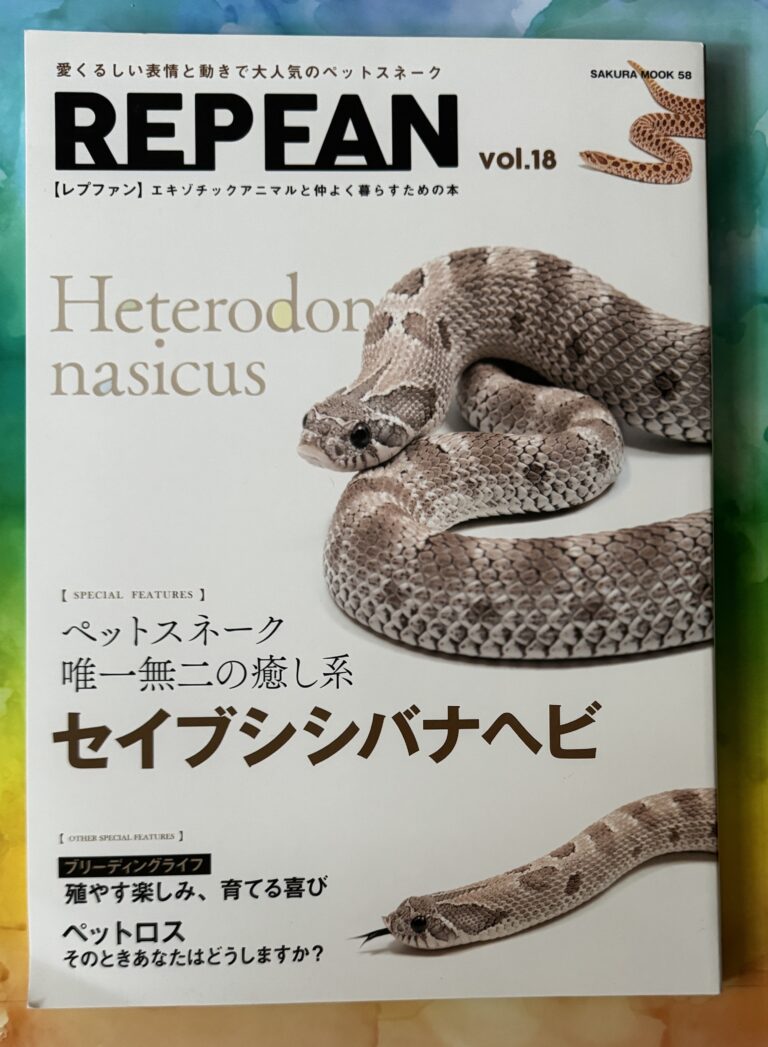
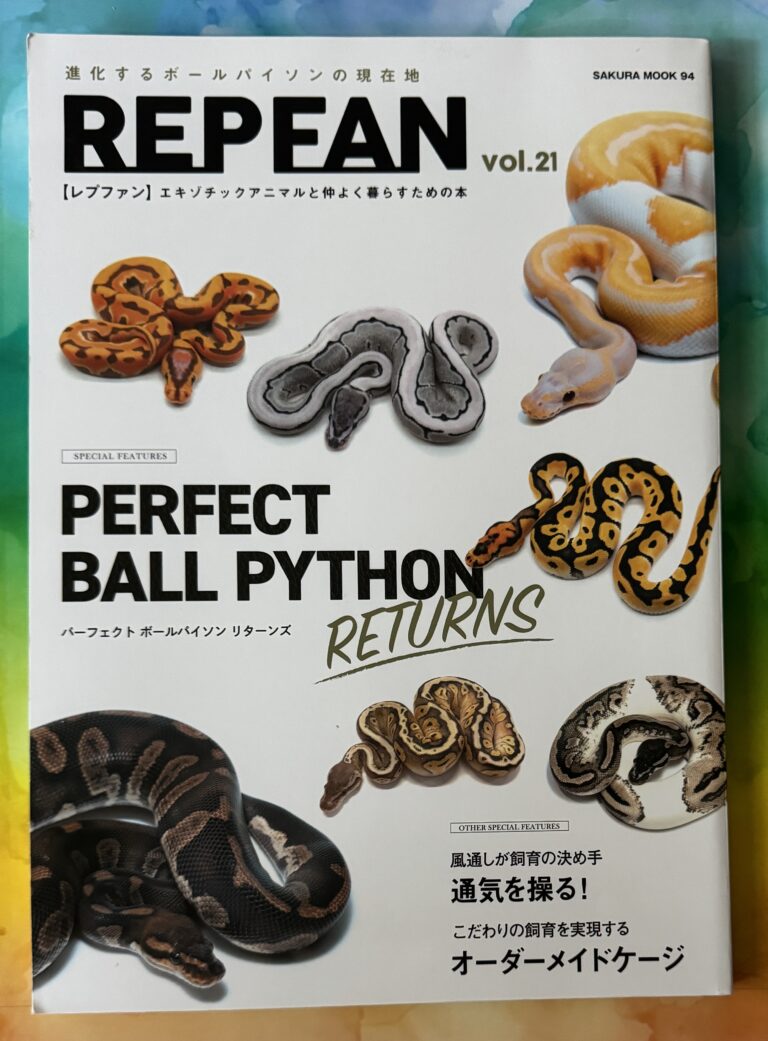
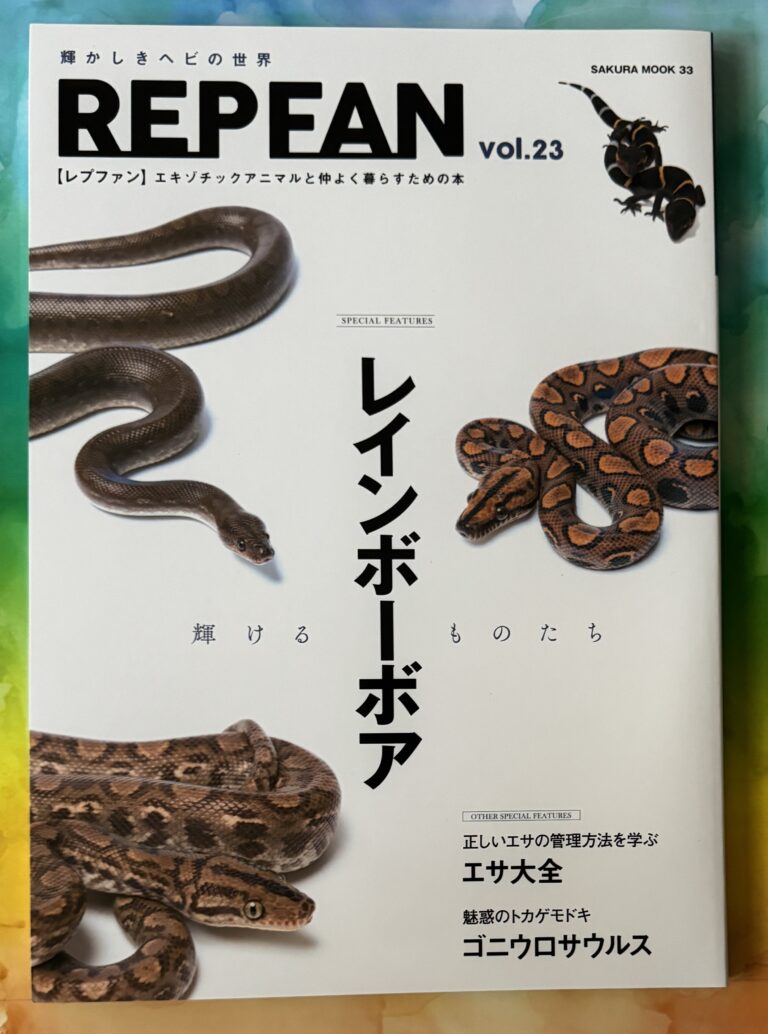
All five represented volumes are strongly snake centered. Vol.7 uses corn snakes as the principal feature. Vol.11 focuses on arboreal snakes. Vol.18 centers on the western hognose snake. Vol.21 returns to ball pythons with a major “Perfect Ball Python Returns” feature. Vol.23 highlights rainbow boas. The covers also document the Japanese market’s strong interest in morphs, breeding, enclosure design and visually distinctive captive snakes.
The series is especially useful for international comparison because the covers combine Japanese explanatory text with English taxonomic or hobby terminology. This makes the physical issues evidence of how global reptile keeping language, species popularity and morph culture were adapted for a Japanese readership.