


Japan
Scale (スケイル)
Publication Identification
| Field | Information |
| Country | Japan |
| Publisher | Art Village, independently verified |
| Publisher address | Pending research update |
| Magazine title | scale |
| Publication status | Pending research update. Collector accounts suggest issue 011 was the last before suspension, but the final status is not independently established. |
| Publication run | Documented issue 001 in 1997 through at least issue 011 in 2001; complete inaugural and final publication dates pending research update. |
| Editor | Art Village credited as editor or compiler in a Japanese bookseller record for issue 005; named individual editor pending research update |
| Printer | Pending research update |
| ISSN | Pending research update |
| Language | Japanese, with recurring English section labels and headings |
| Publication type | Japanese reptile and amphibian information magazine |
| Publication frequency | Quarterly, independently documented in a contemporary 1998 reference |
Preservation Significance
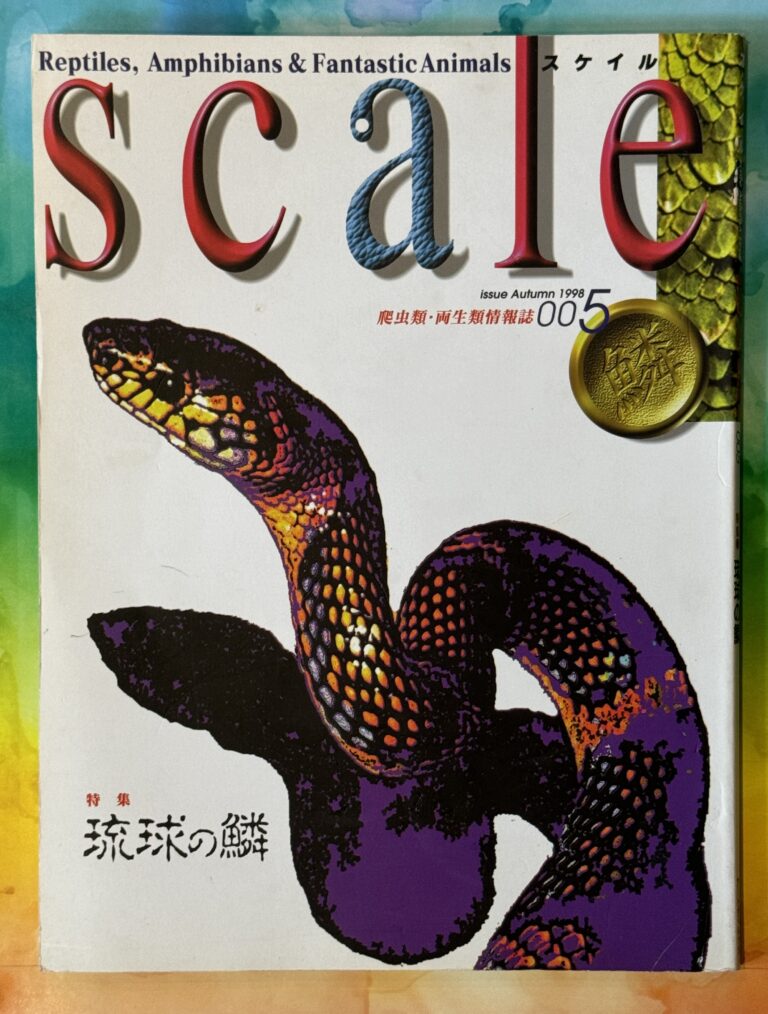
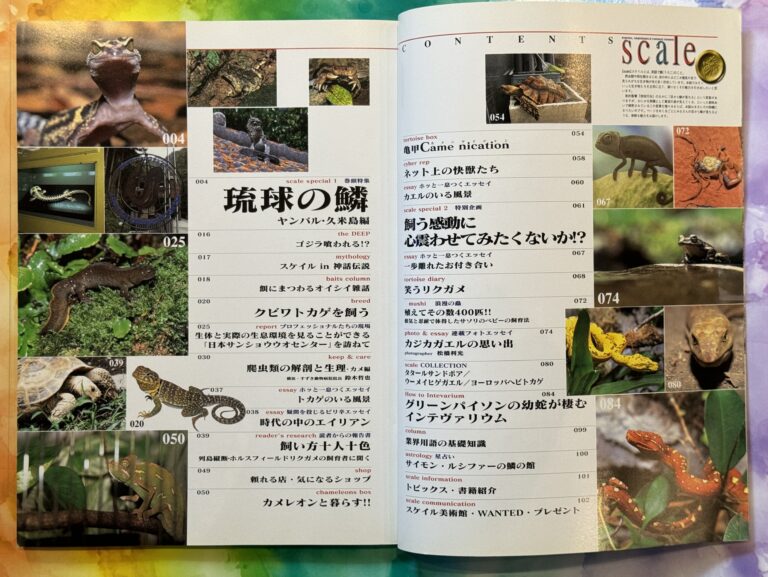
Issue 005 is a strong preservation example because it documents a late 1990s Japanese reptile and amphibian magazine that combined field herpetology, captive care, natural history, photography, specialist retail information and terrarium culture in a highly visual format. The issue also demonstrates how Japanese herpetological publishing developed its own editorial and graphic identity rather than simply reproducing the visual conventions of English language hobby magazines.
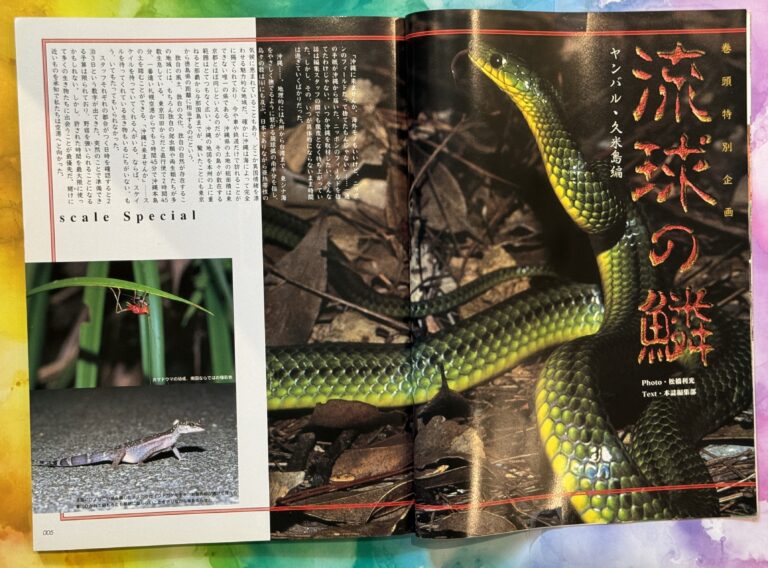
The principal feature, 琉球の鱗, centers on the Ryukyu Islands and specifically identifies Yanbaru and Kume Island. The opening feature photographs reptiles and other animals in habitat and presents regional field material alongside the magazine’s broader captive care and husbandry content. This makes the issue useful not only as a hobby publication but also as a record of how native Japanese reptiles and amphibians were presented to specialist readers during the period.
The issue also preserves a publication that is difficult to reconstruct from current online information alone. Contemporary and later sources confirm the title, publisher and issue numbering, but complete publication records are sparse. A surviving physical issue therefore preserves cover design, internal organization, photography, Japanese terminology and article sequencing that would otherwise be difficult to document reliably.