


United States
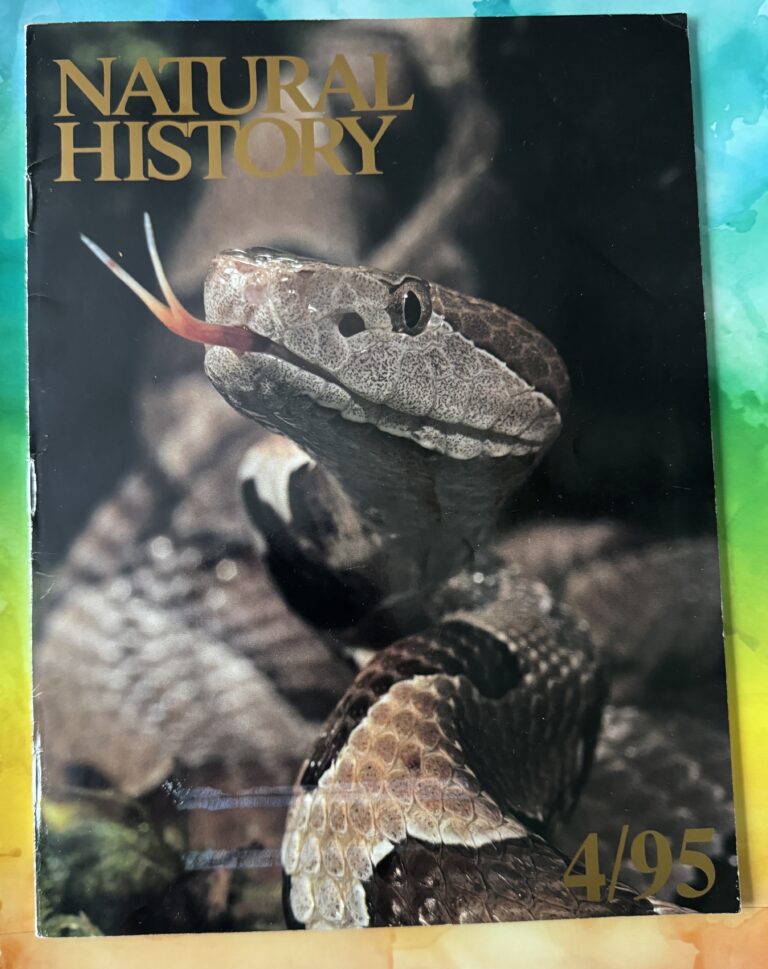
Natural History
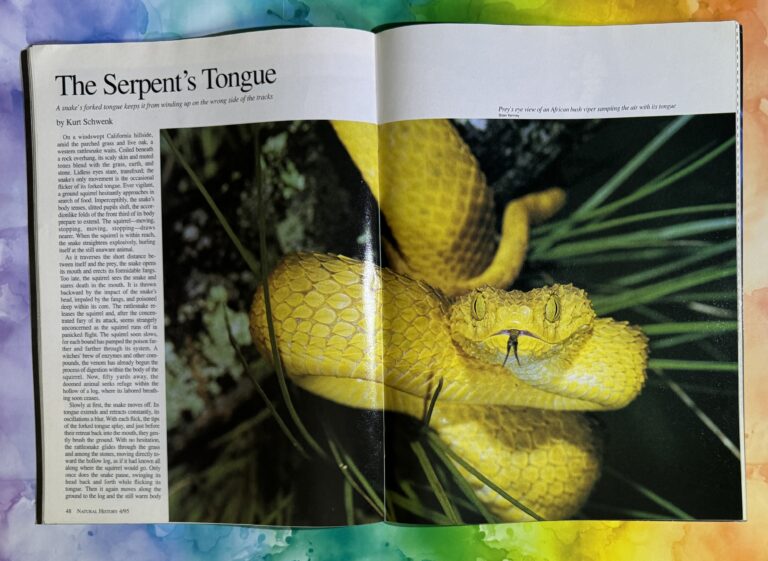
article by Kurt Schwenk, PhD
Publication Identification
| Field | Information |
| Country | United States |
| Publisher | American Museum of Natural History, New York & Robert L. Gebbie |
| Publisher address | Central Park West at 79th Street, NY., NY. 10024 |
| Magazine title | Natural History |
| Publication status | Current publication issues are still available in print and digital form |
| Publication run | 1900 onward. Exact final publication date: Pending research update |
| Editor | Ellen Goldensohn Managing Editor |
| Printer | American Museum of Natural History; Printed on recycled paper |
| ISSN | 0028-0712 |
| Language | English |
| Publication type | General interest natural history and science magazine |
Preservation Significance
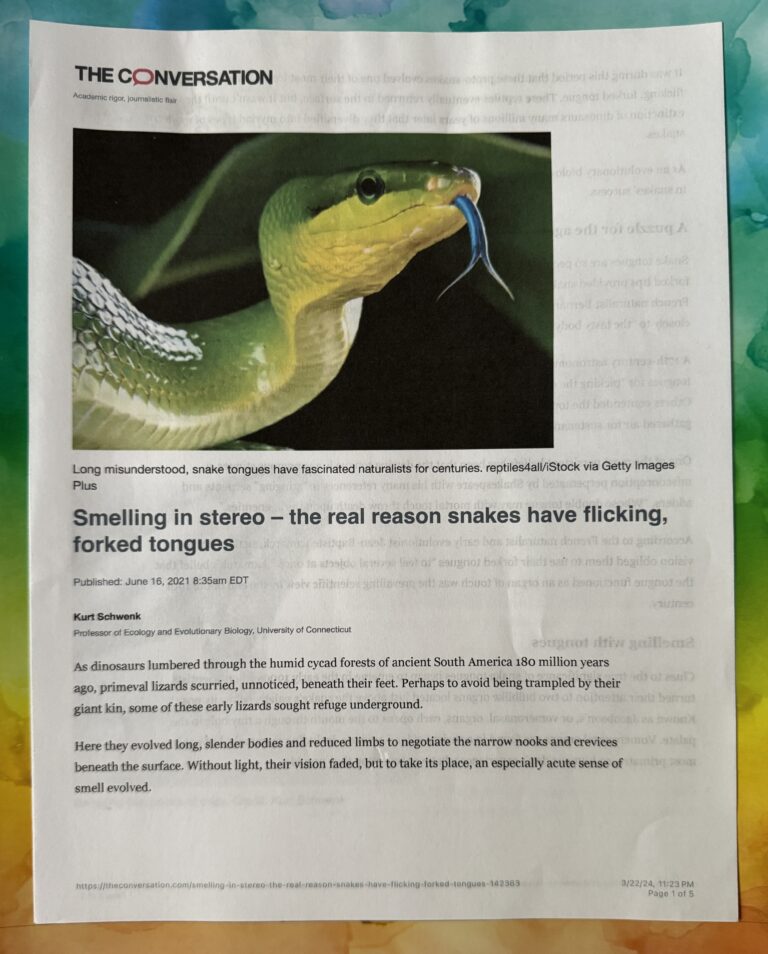
This issue has preservation value independent of its personal association. Natural History represents a long running tradition of communicating scientific research to a general audience, and this April 1995 issue preserves a period example of how research in animal sensory biology was presented outside specialist academic journals. Kurt Schwenk’s article, “The Serpent’s Tongue,” is especially significant because it explains research into snake tongue flicking and the sensory function of the forked tongue, an area of study that contributed to a better understanding of how snakes collect and interpret chemical information from their surroundings. Preserving the issue retains both the original scientific communication and the visual and editorial context in which that research was presented to the public.
The magazine also preserves the physical context that is often lost when an individual article is separated from its original issue. The cover, typography, article layout, photography, neighboring content, pagination, and magazine design are all part of the historical record of science communication in 1995. Digital citations can preserve bibliographic facts, but the physical issue preserves the publication as readers originally encountered it.
Personal Significance
This issue also has unusual personal significance within the collection. I obtained it specifically because of Dr. Kurt Schwenk’s research on snake tongue flicking, a field closely connected to the type of research I hope to pursue myself. I also had the extraordinary opportunity to meet with Dr. Schwenk and spend an extended period of time speaking with him about his overall research and related scientific interests. Because of that experience, this issue represents more than an example of historical science communication. It connects an area of research that has influenced my own academic interests with a scientist whose work I was fortunate enough to discuss with him directly.