


United States
Boulenger Contributions to American Herpetology
(G. A. Boulenger: Contributions to American Herpetology)
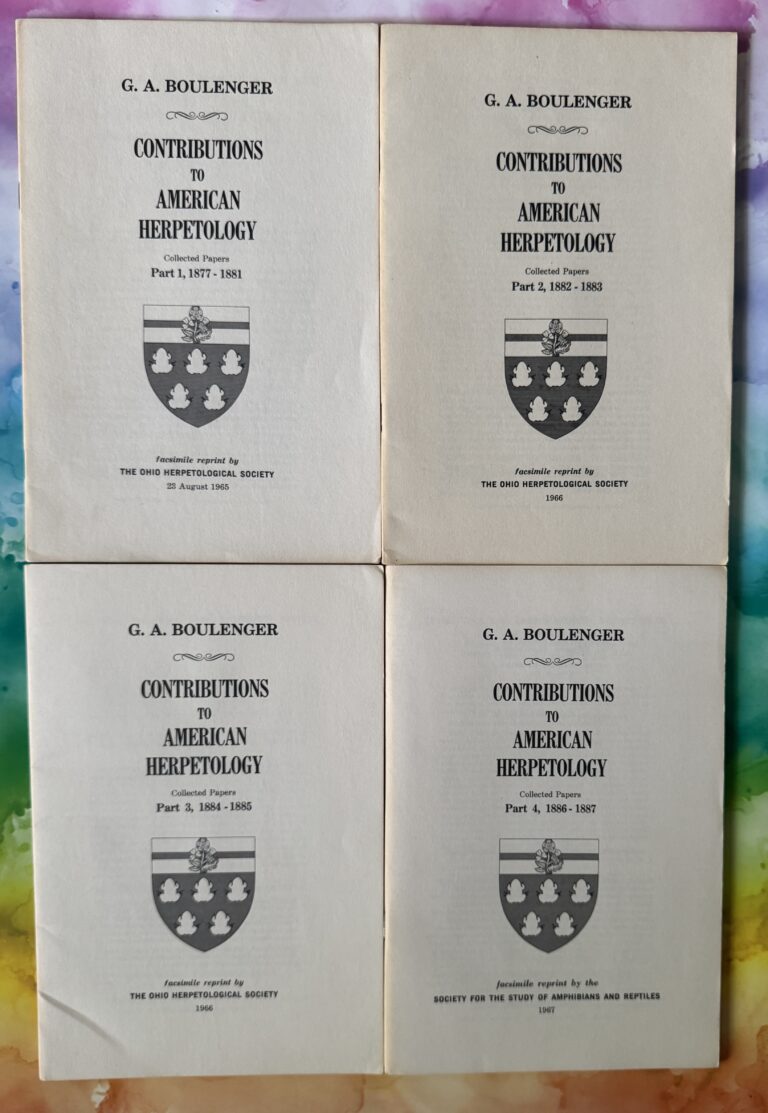
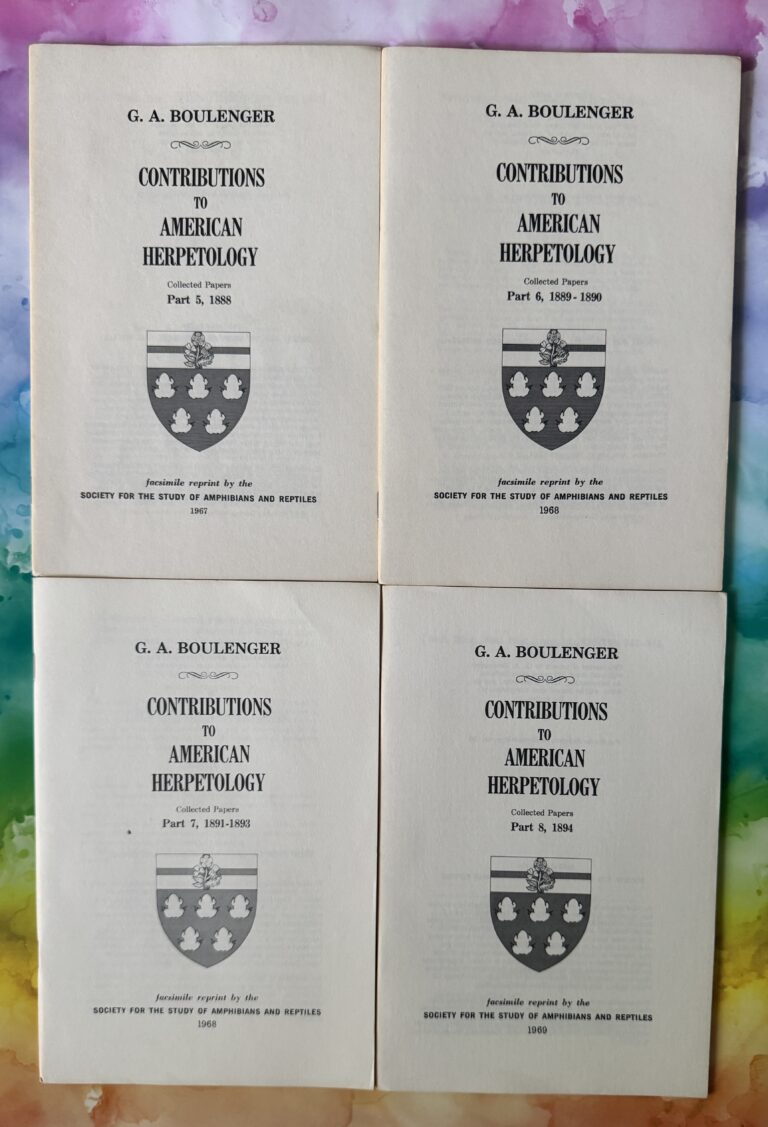
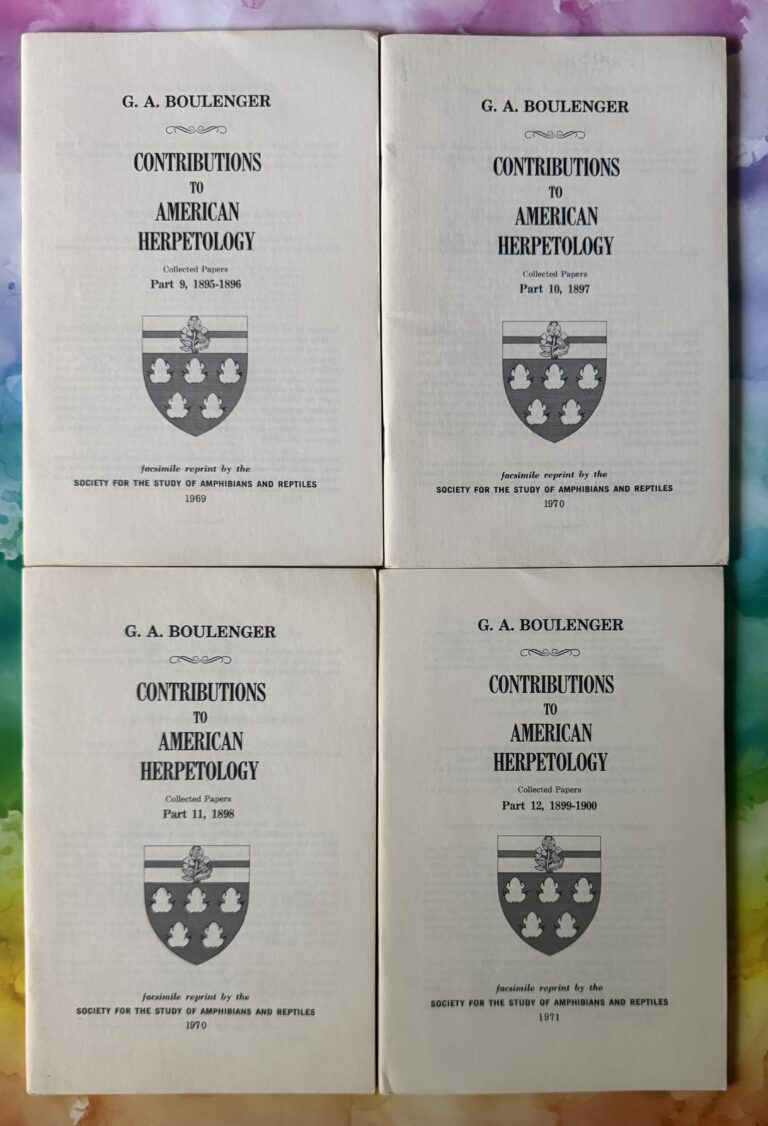
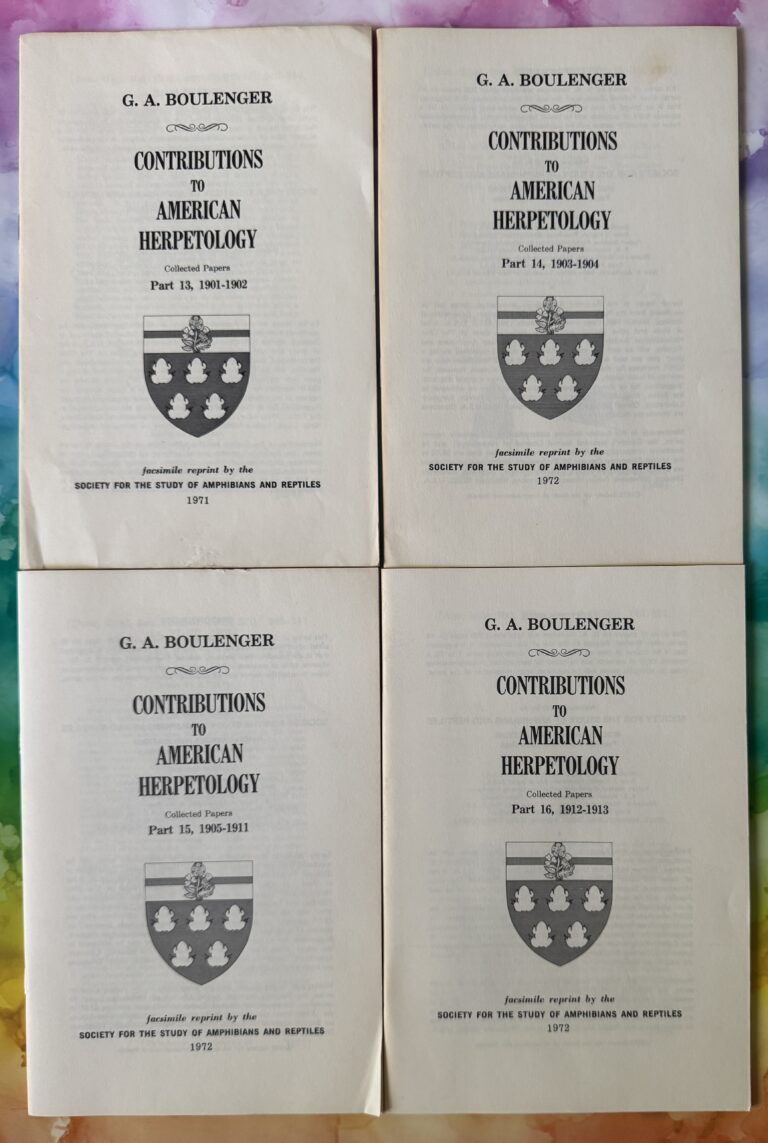
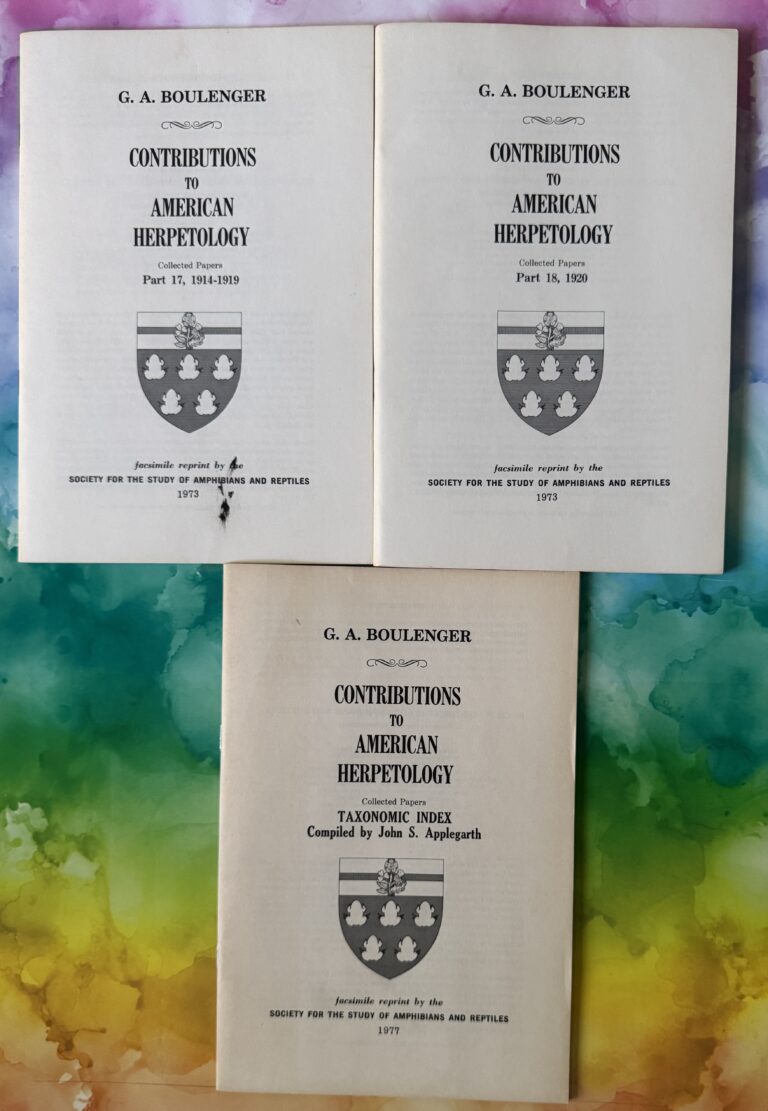
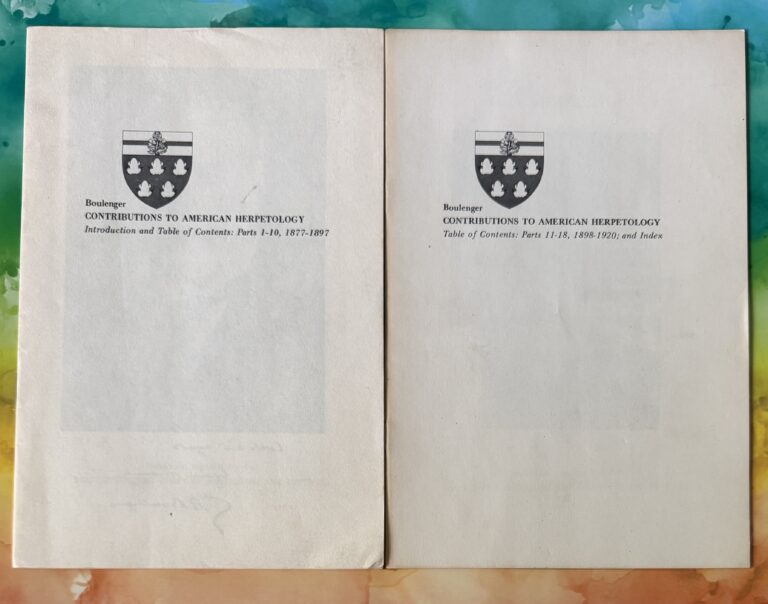
Complete facsimile reprint set represented by the photographed physical copies.
Publication Identification
| Field | Information |
| Country | United States |
| Publication title | Contributions to American Herpetology |
| Years represented in the collection | Facsimile reprints 1965–1977; original papers represented 1877–1920 |
| Publisher(s) | The Ohio Herpetological Society; Society for the Study of Amphibians and Reptiles (SSAR) |
| Frequency | Irregular: facsimile reprint series |
| Publisher address | Pending research update |
| Publication status | Completed facsimile reprint project represented by Parts 1–18 and supplementary finding aids |
| Publication run | Facsimile reprints 1965–1977; original papers 1877–1920 |
| Editor | Pending research update |
| Printer | Pending research update |
| ISBN / ISSN | Pending research update |
| Language | English |
| Publication type | Facsimile reprint series of collected herpetological papers |
Preservation Significance
This collection has substantial preservation significance because it retains the complete physical facsimile sequence of Parts 1 through 18, together with the introductory and table of contents material and the separate Taxonomic Index. The reprints preserve access to George Albert Boulenger’s American herpetology papers originally published from 1877 through 1920, while the physical booklets themselves document a second period of preservation work carried out from 1965 through 1977 by The Ohio Herpetological Society and the Society for the Study of Amphibians and Reptiles. As a complete sequence, the collection therefore preserves two layers of herpetological history: Boulenger’s original scientific work and the later institutional effort to gather, reproduce, organize, and keep that work accessible. Retaining the individual parts and their supplementary finding aids also preserves the original structure of the facsimile project, including the transition between the two reprinting organizations, rather than reducing the material to later bound or digital bibliographic records.