


United States
Fauna
Publication Identification
| Field | Information |
| Country | United States |
| Publisher | International Fauna Society (associated organization; exact imprint not independently established) |
| Publisher address | Pending research update |
| Magazine title | FAUNA |
| Publication status | Historical publication; current status and final issue not independently verified |
| Publication run | Documented from at least 1997 through 2004; exact inaugural and final dates unverified |
| Editor | Pending research update |
| Printer | Pending research update |
| ISSN | Pending research update |
| Language | English |
| Publication type | Wildlife, herpetology, natural history, conservation, field exploration and adventure magazine |
| Publication frequency | Pending research update. Bimonthly issue dates documented for part of 2001; full-run frequency unverified. |
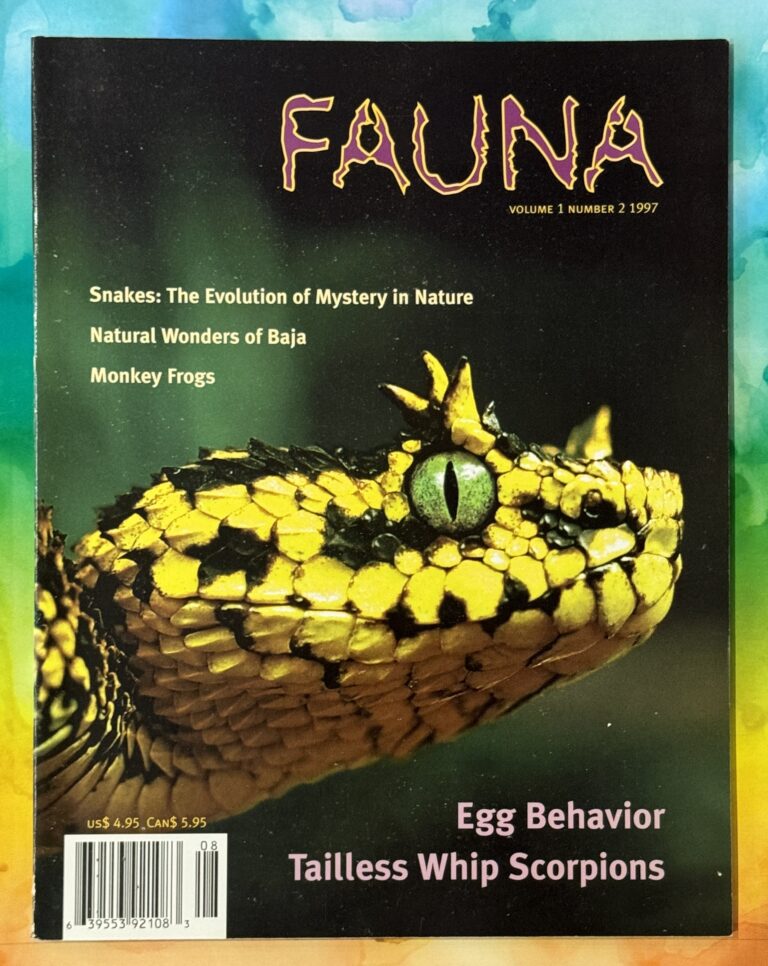
| Collection coverage | Volume 1, Number 2 (1997); Volume 4, Number 3 (Autumn 2003) |
| Earliest issue represented | Volume 1, Number 2 (1997) |
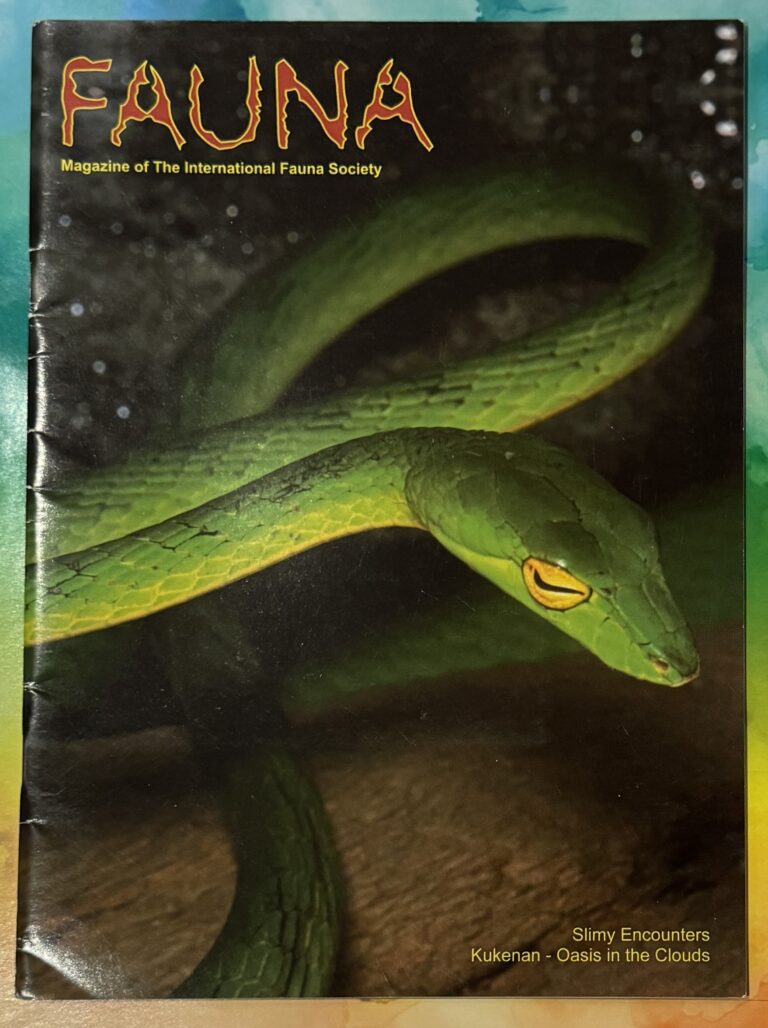
| Latest issue represented | Volume 4, Number 3 (Autumn 2003) |
| Issues represented | Volume 1, Number 2 (1997); Volume 4, Number 3 (Autumn 2003) |
| Frequency | Not verified for the entire run; bimonthly issue designations documented for part of 2001 |
Preservation Significance
FAUNA has preservation significance because it documents a form of wildlife publishing that combined herpetology, broader natural history, conservation, field exploration, and visually ambitious animal photography. These two issues, from 1997 and 2003, show that snakes remained a prominent part of the magazine’s visual and editorial identity across several years. The 1997 issue presents snakes within a broader mix of reptiles, amphibians, invertebrates, and regional natural history, while the 2003 issue explicitly identifies the publication as the Magazine of The International Fauna Society. Preserving these issues helps retain evidence of the Society’s publishing activity and of the way late twentieth and early twenty first century wildlife publications presented reptiles alongside conservation, travel, and natural history. Because the complete publication history and surviving issue population are not yet well documented in easily accessible public sources, physical copies also preserve bibliographic evidence that may otherwise be difficult to reconstruct.