


United Kingdom
Reptilian
Publication Identification
| Field | Information |
| Country | United Kingdom |
| Publisher | Mantella Publishing |
| Publisher address | 22 Firs Close, Hazlemere, High Wycombe, Bucks HP15 7TF, England |
| Magazine title | The Reptilian |
| Publication status | Historical print title; apparently discontinued. No continuing publication verified. A 27 April 2001 subscriber report describes missed deliveries and an unavailable website, but does not establish a formal closure date. |
| Publication run | Documented issues span at least 1992 through 2000 (Volumes 1–6). Exact inaugural and final issue dates remain unverified. This documented span is not a claim that the complete publication run ended in 2000. |
| Editor | Tom Burgess |
| Printer | The Magazine Printing Company Limited, England, on the photographed mastheads |
| ISSN | 0966 7911 |
| Language | English |
| Publication type | Specialist reptile, amphibian, herpetology and terrarium magazine |
| Publication frequency | Pending research update |
Preservation Significance
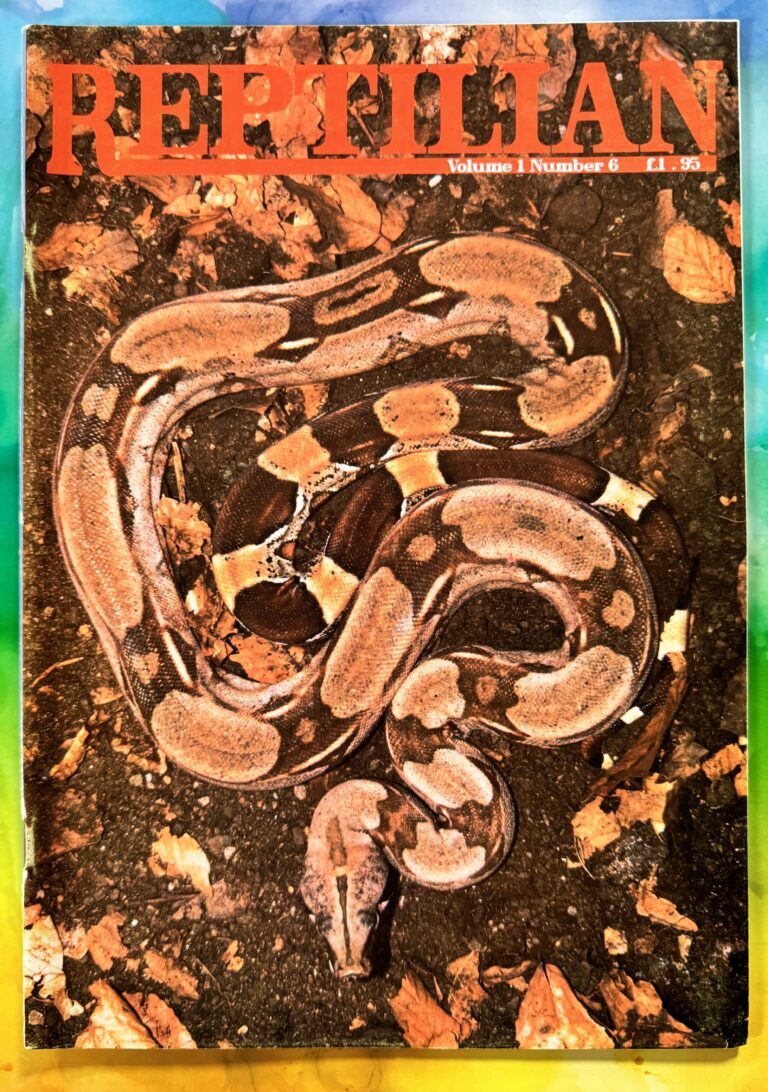
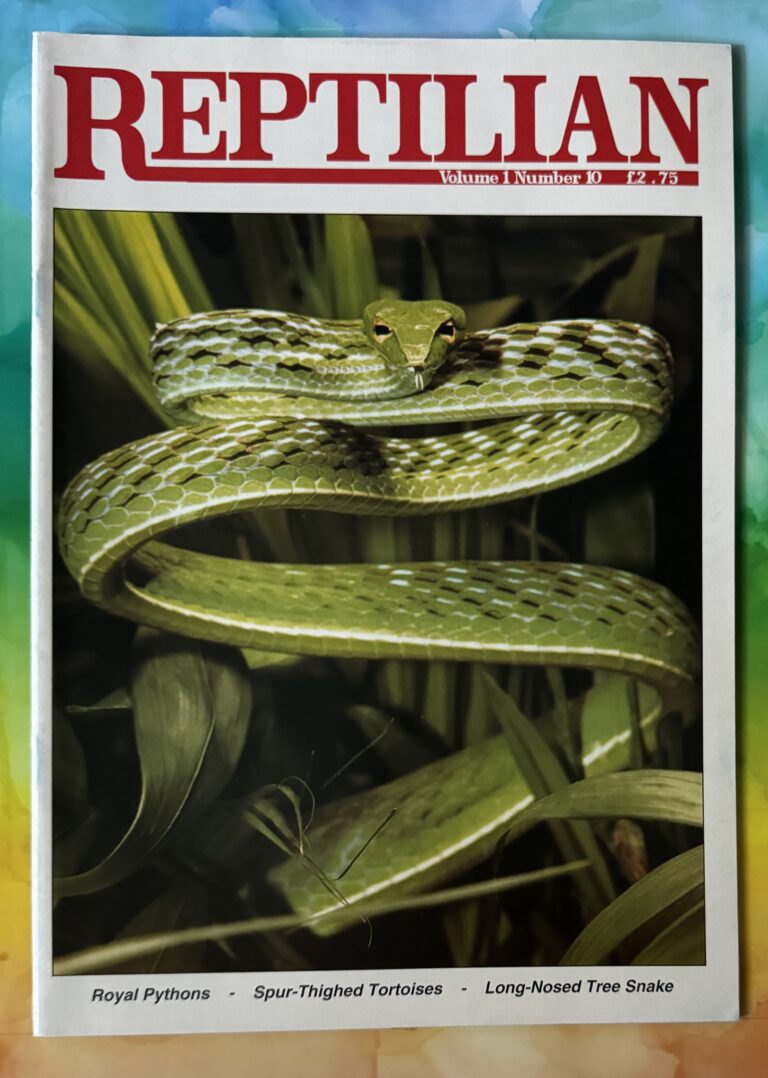
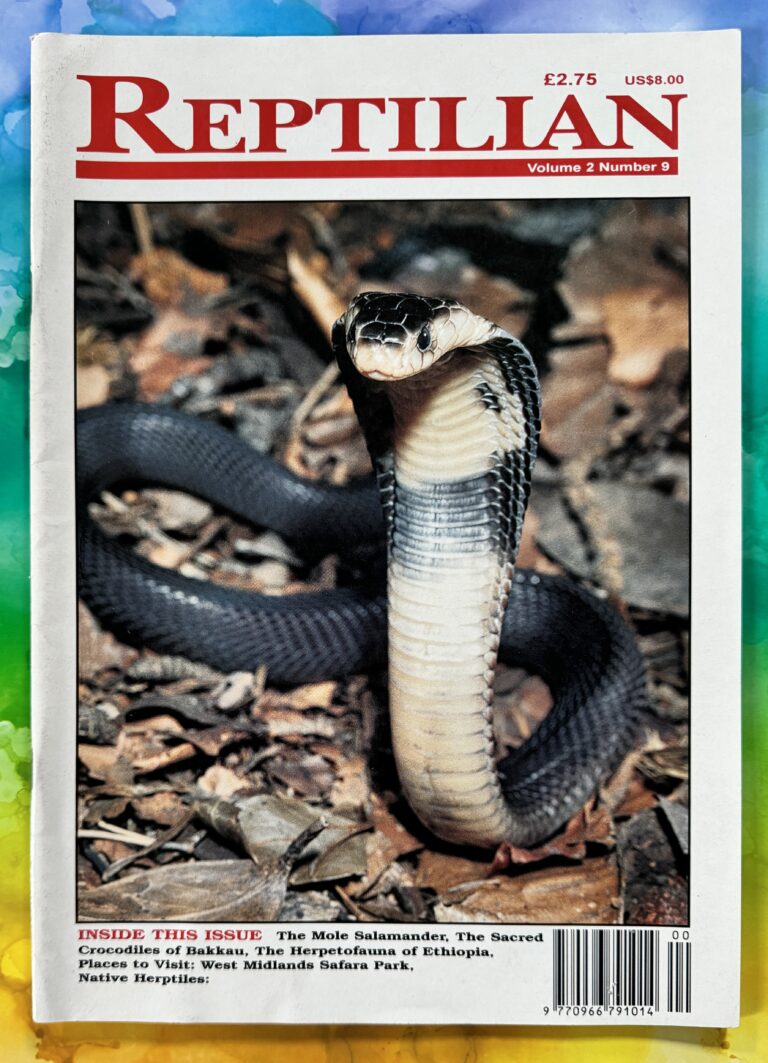
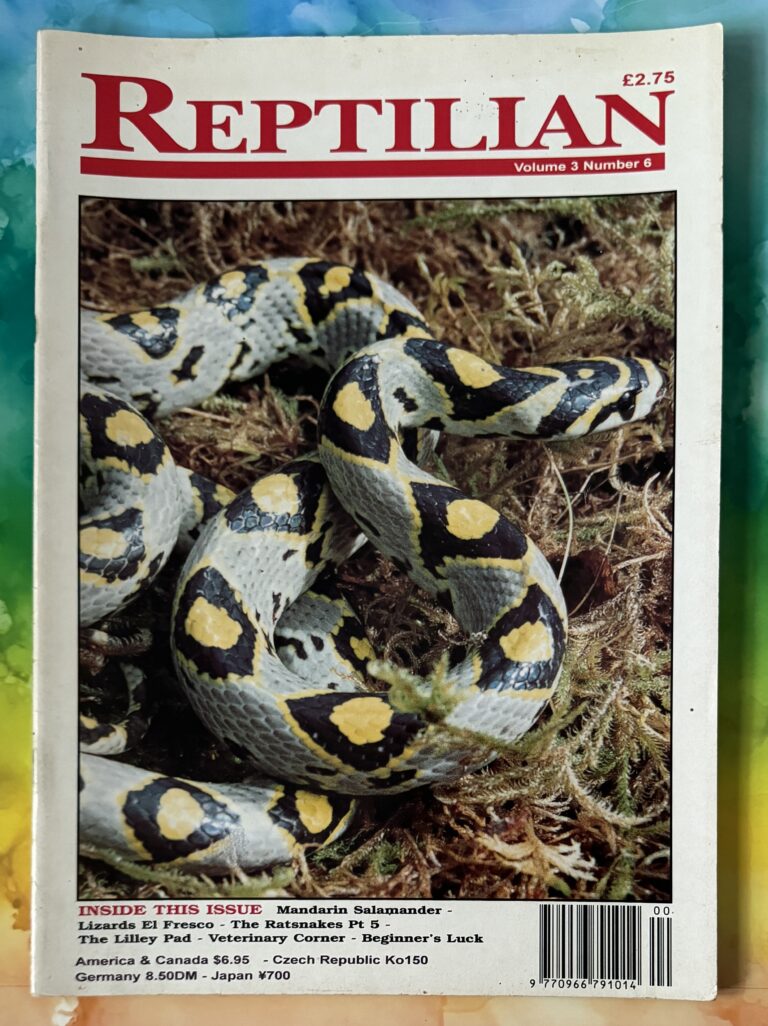
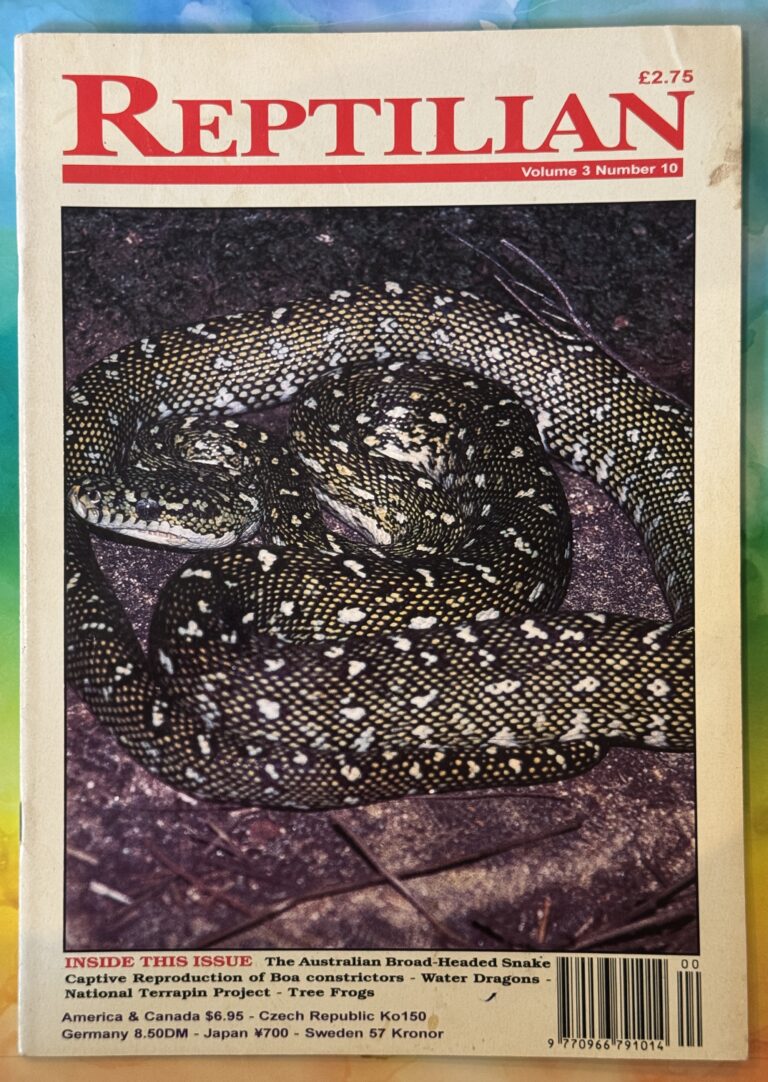
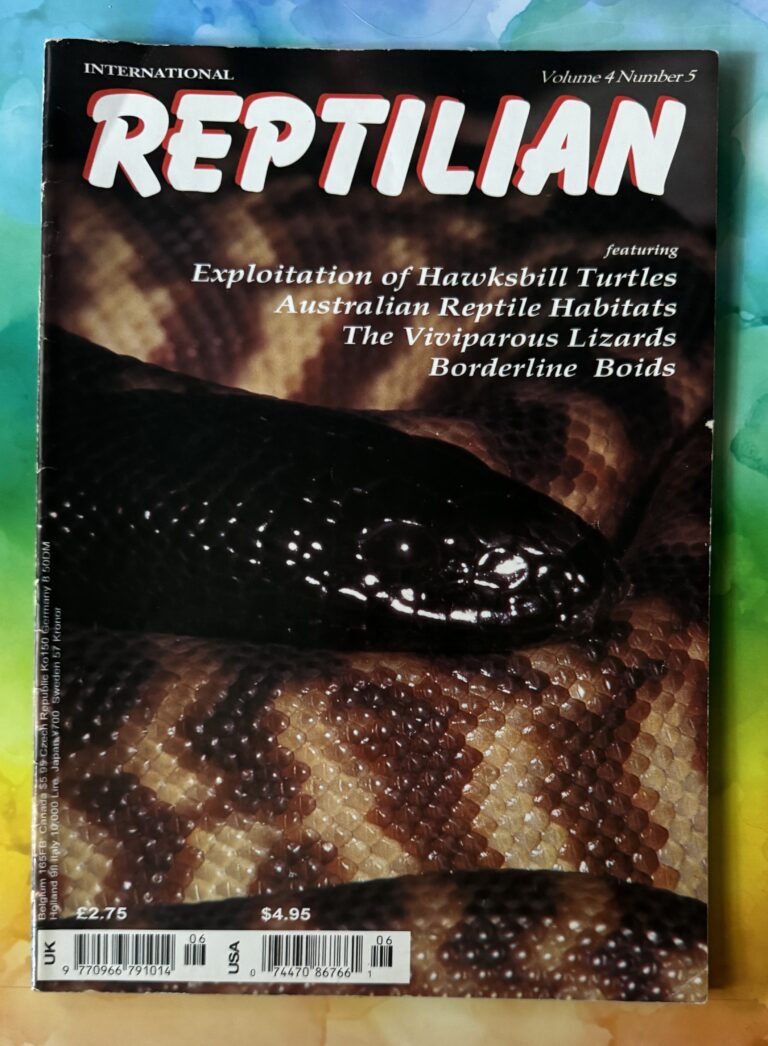
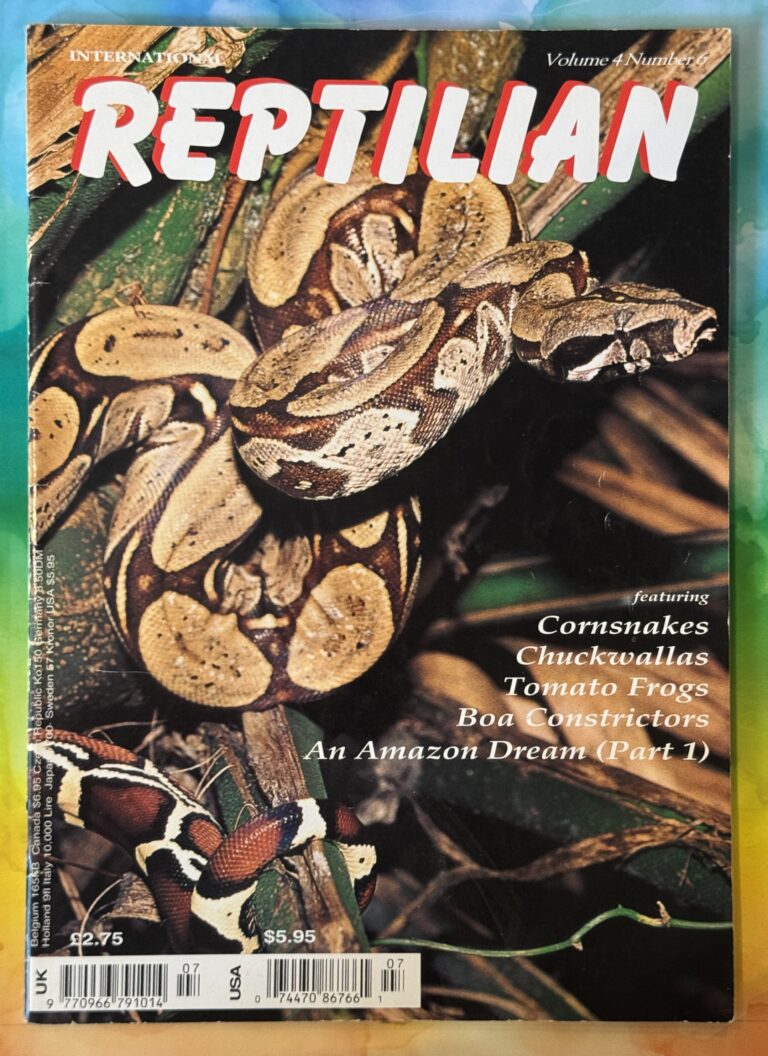
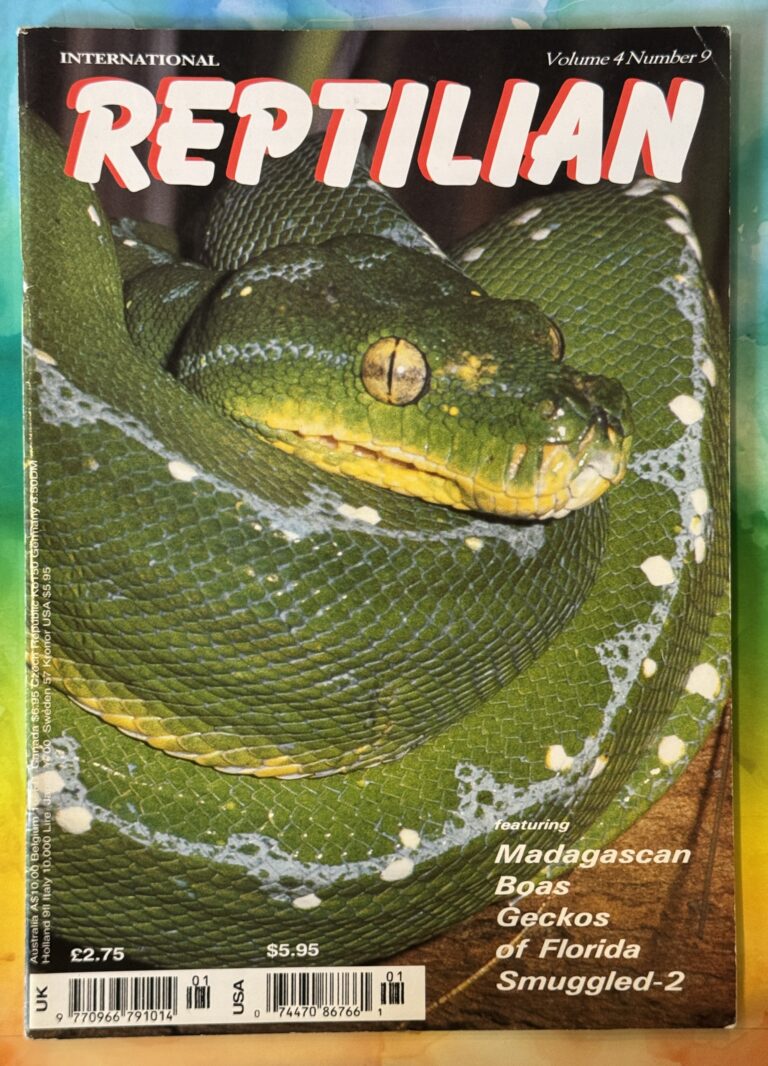
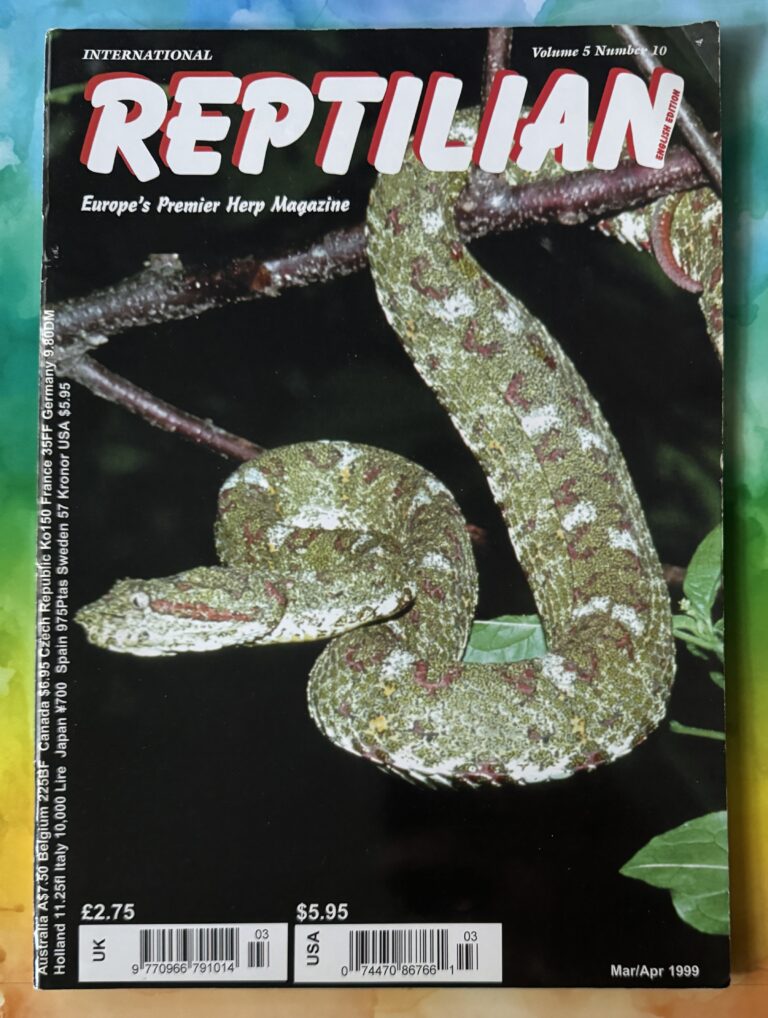
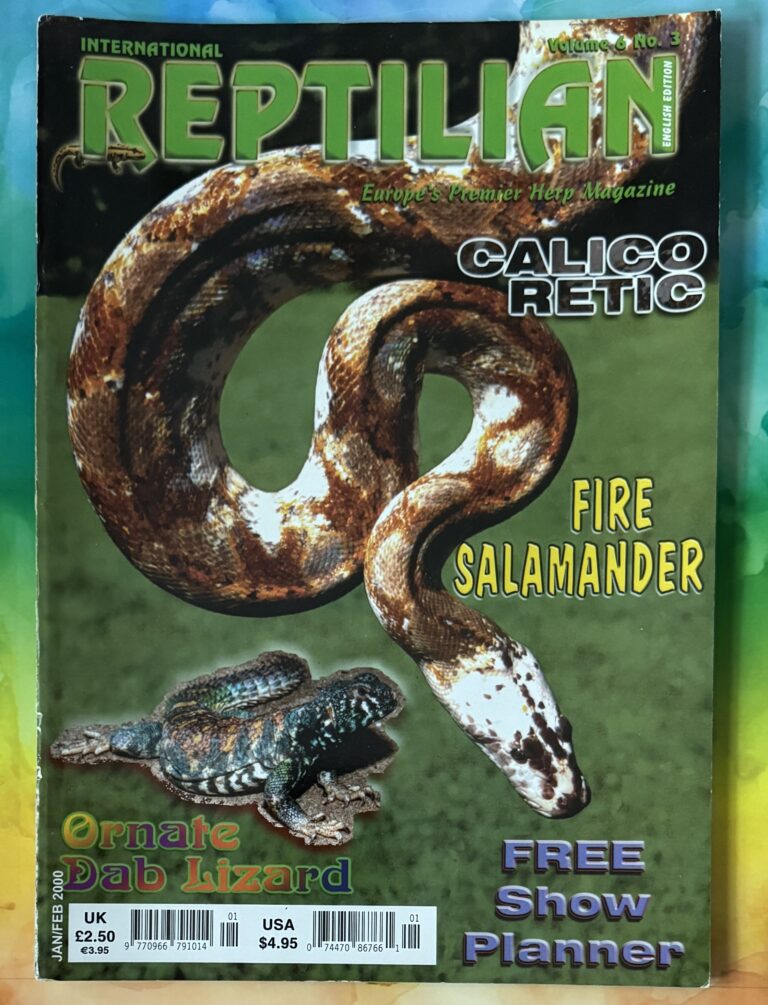
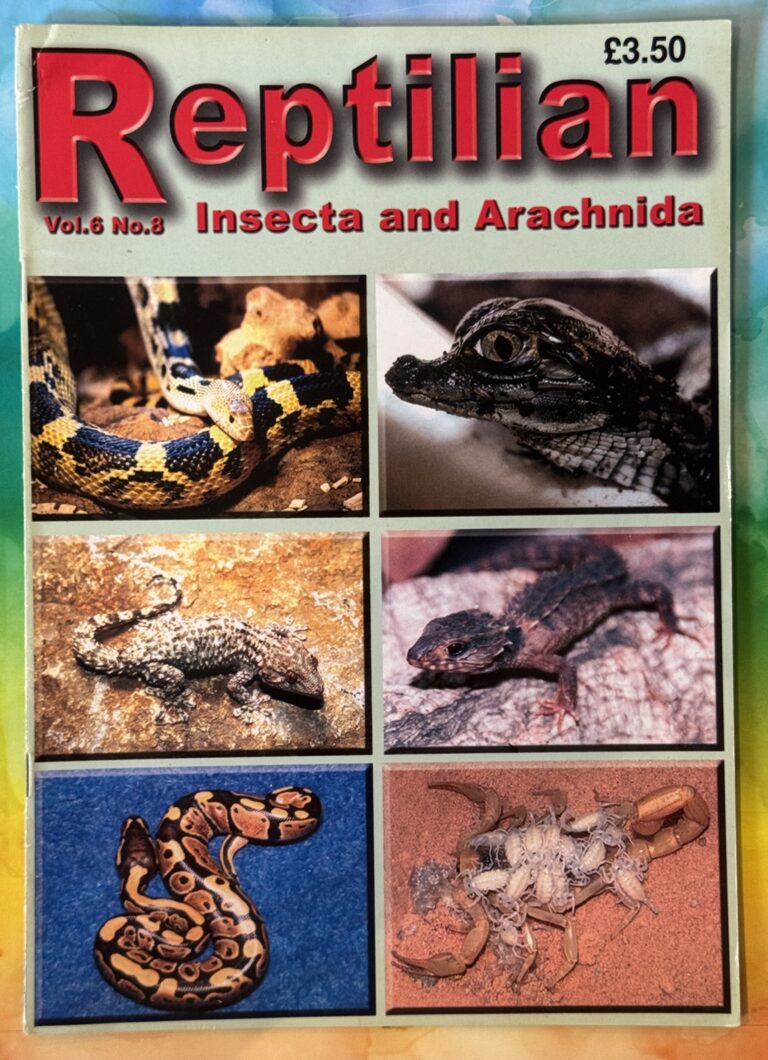
The Reptilian is significant within the preservation collection because the surviving run documents the development of a British specialist herpetological magazine across multiple volumes and changing visual identities. The collection includes Volume 1 and extends through photographed Volume 6 issues, allowing changes in cover design, international marketing, pricing, subject emphasis and distribution to be followed across much of the publication’s visible history.
The early issues preserve a period when specialist reptile information circulated primarily through printed magazines, specialist retailers and mail subscriptions. The subjects visible on the surviving covers include boas, pythons, cobras, tree snakes, cornsnakes, rattlesnakes, lizards, salamanders, tortoises, frogs, crocodilians, arachnids, captive reproduction, habitat, conservation and international herpetology. That range makes the run useful as a record of both animal keeping and broader herpetological interests during the 1990s and early 2000s.
The first volume is particularly important because it preserves the publication close to its beginning. Later volumes show that the magazine was not static. Its visual presentation, international branding, prices and cover language changed substantially while the underlying focus on reptiles, amphibians and related captive keeping subjects remained recognizable.