


Germany
Herpetfauna
Publication Identification
| Field | Information |
| Country | Germany |
| Publisher | herpetofauna-Verlags GmbH |
| Publisher address | Pending research update. Historical publishing locations include Ludwigsburg-Oßweil and Weinstadt. |
| Magazine title | herpetofauna |
| Publication status | Discontinued. A historical account reports cessation in 2004; exact final issue pending research update. |
| Publication run | First issue: 1. Jahrgang, No. 1, July 1979. Known publication period: 1979–2004. Exact final issue pending research update. |
| Editor | Pending research update |
| Printer | Pending research update |
| ISSN | 0172-7761 |
| Language | German |
| Publication type | German specialist herpetological and terrarium periodical |
| Publication frequency | Bimonthly / six issues per year |
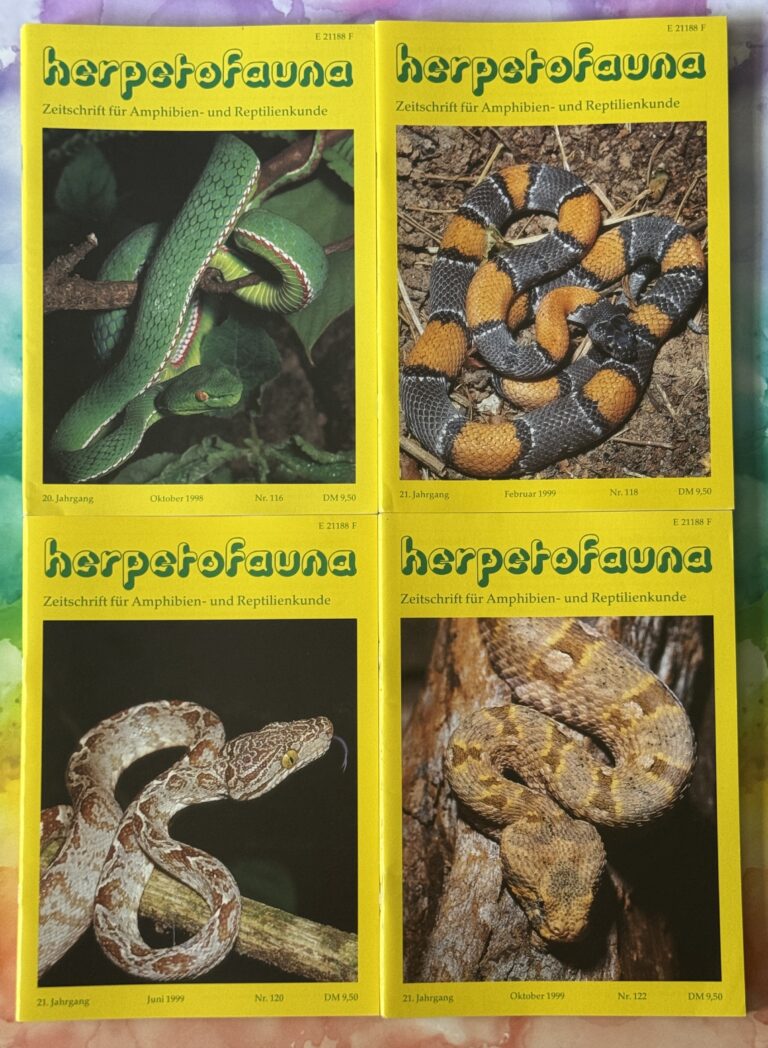
Preservation Significance
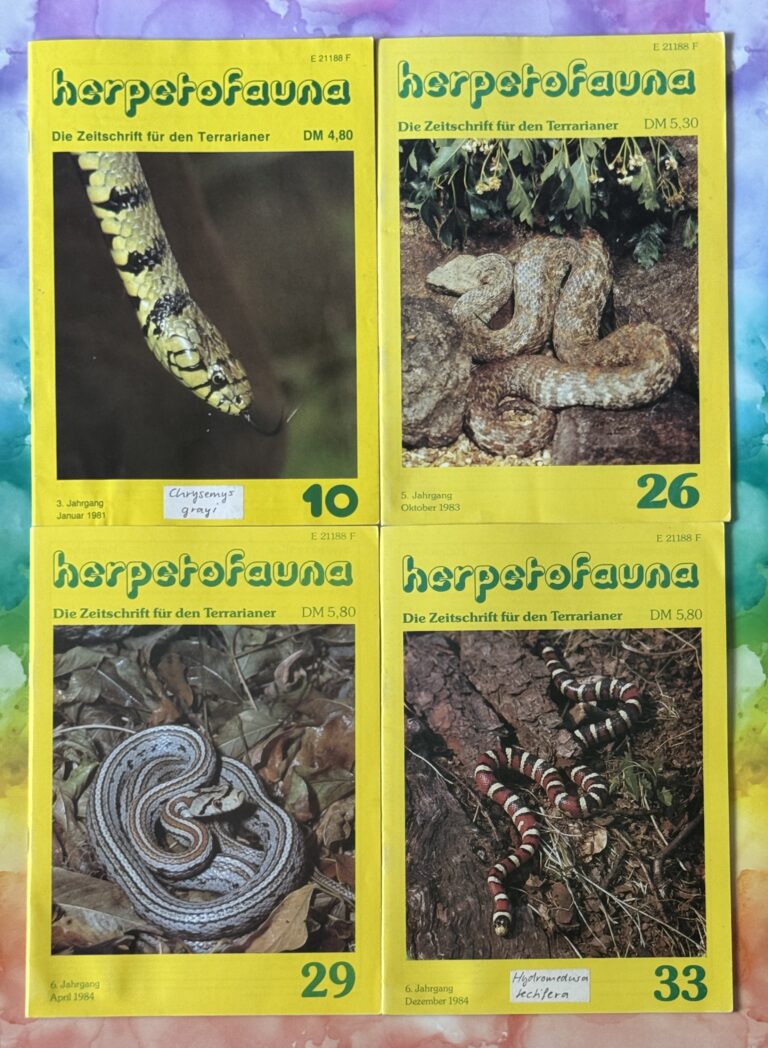
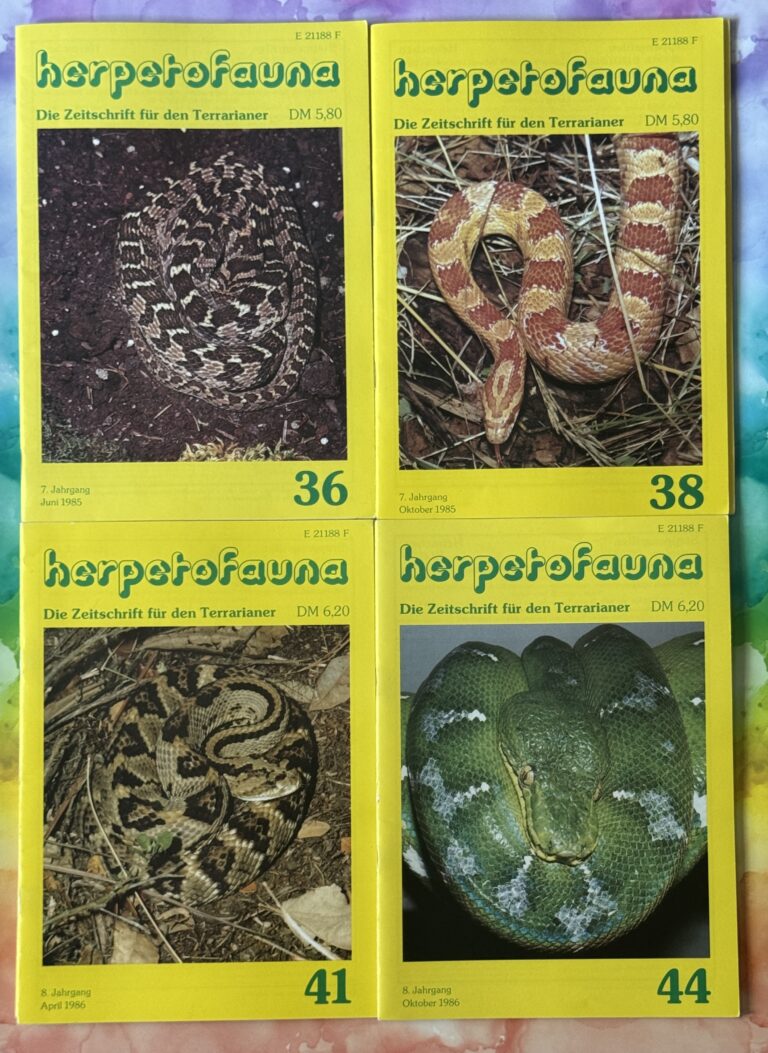
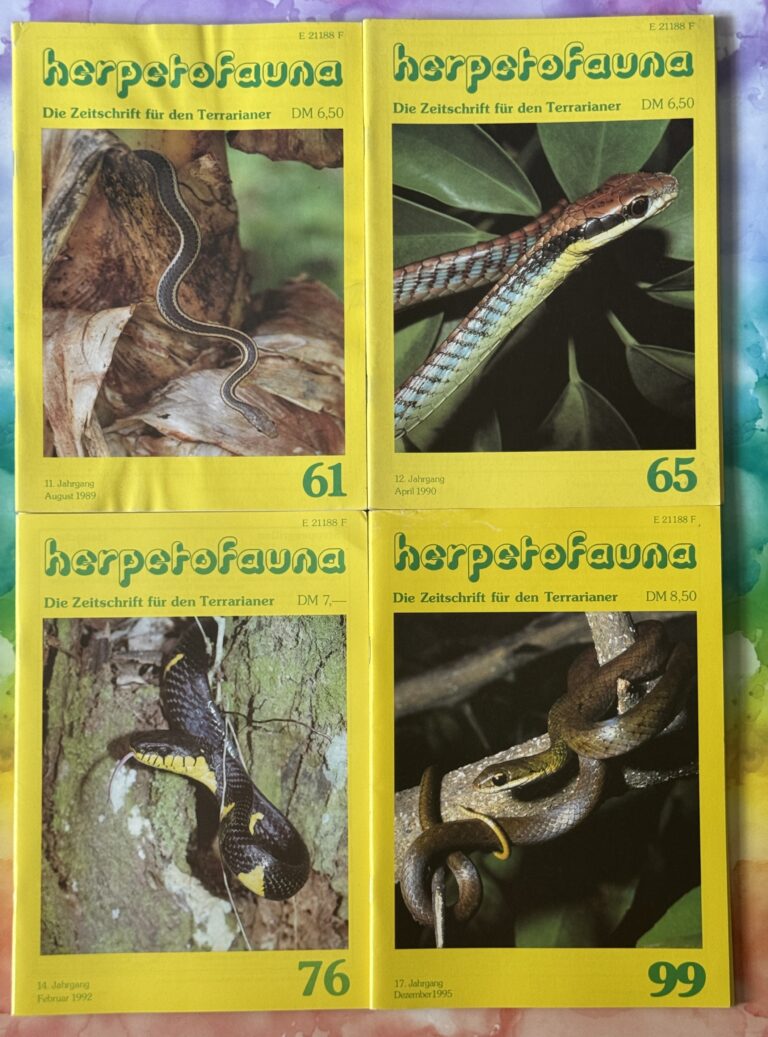
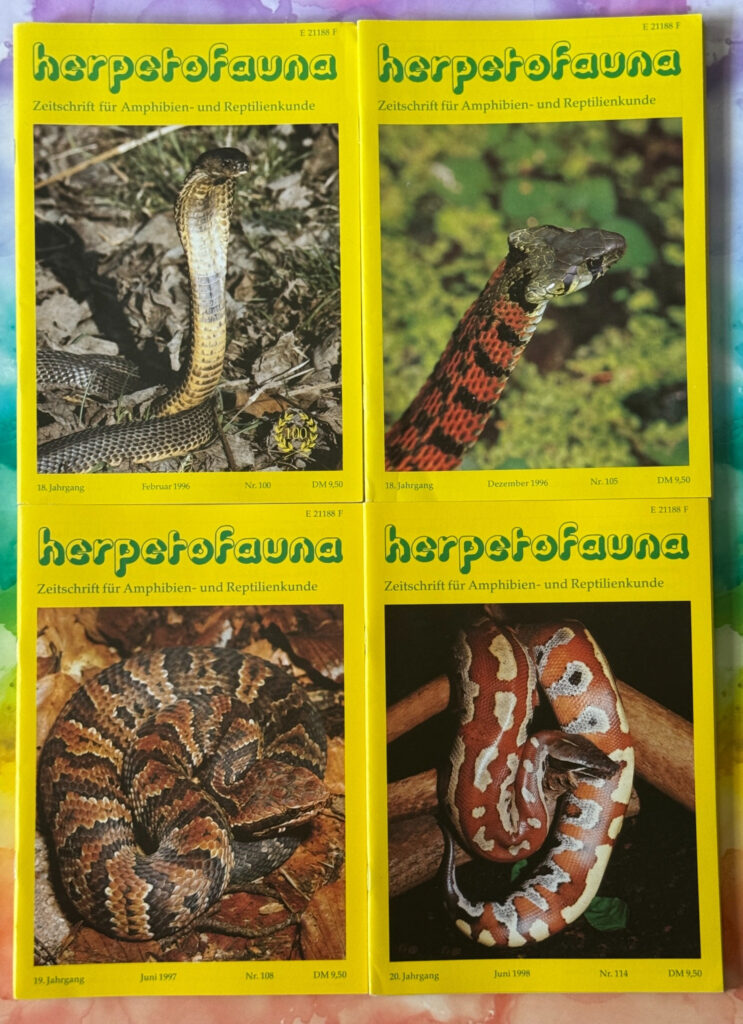
Herpetofauna has preservation significance as a long running German specialist periodical documenting reptile and amphibian keeping, husbandry and herpetology across more than two decades of rapid change in European terraristics. The issues represented in the collection span 1981 through 1999 and preserve a nearly twenty year visual and bibliographic record of the publication, including sequential issue numbering, volume years, changing cover prices, evolving subtitle language and a sustained emphasis on reptiles and amphibians. The earlier issues identify the publication as “Die Zeitschrift für den Terrarianer” (“The Magazine for the Terrarium Keeper”), while later issues use “Zeitschrift für Amphibien- und Reptilienkunde” (“Journal for Amphibian and Reptile Studies”), reflecting a shift in how the publication presented its subject and audience. The surviving covers also document the prominent place of snakes within the magazine’s visual identity, while the publication’s complete index records articles dating back to 1979. Preserving these physical issues retains evidence of German language herpetological and terrarium culture, publication practices and specialist knowledge that developed before online herpetological information became widespread.